

Salesforce business analysis is reshaping how Salesforce professionals work — and this article breaks down everything you need to know.
I've seen way too many admins get stuck in the "order taker" trap. You know the one - where a stakeholder asks for a new checkbox, and you just build it without a second thought. Here's the thing: Salesforce business analysis is what actually keeps your org from turning into a total mess of technical debt. If you want to move from just being "the person who fixes passwords" to a strategic partner, you've got to master this toolkit.
Why Salesforce business analysis is your secret weapon
In a recent podcast episode, Denise Carbone from ImagineCRM hit the nail on the head. She argued that we need to be process-first and technology-second. It sounds simple, but honestly, most teams get this wrong. They jump straight into Flow or Apex before they even understand what the user is trying to achieve. When you prioritize Salesforce business analysis, you ensure that the solution actually solves the problem instead of just adding more clutter.
I've seen teams spend weeks building complex automations only to realize the users didn't even want the feature. That's a massive waste of time. By being curious and asking "why" at the start, you can map out current processes and visualize how to make them better before you ever touch a Sandbox. Remember, clarity is your biggest contribution as an admin.
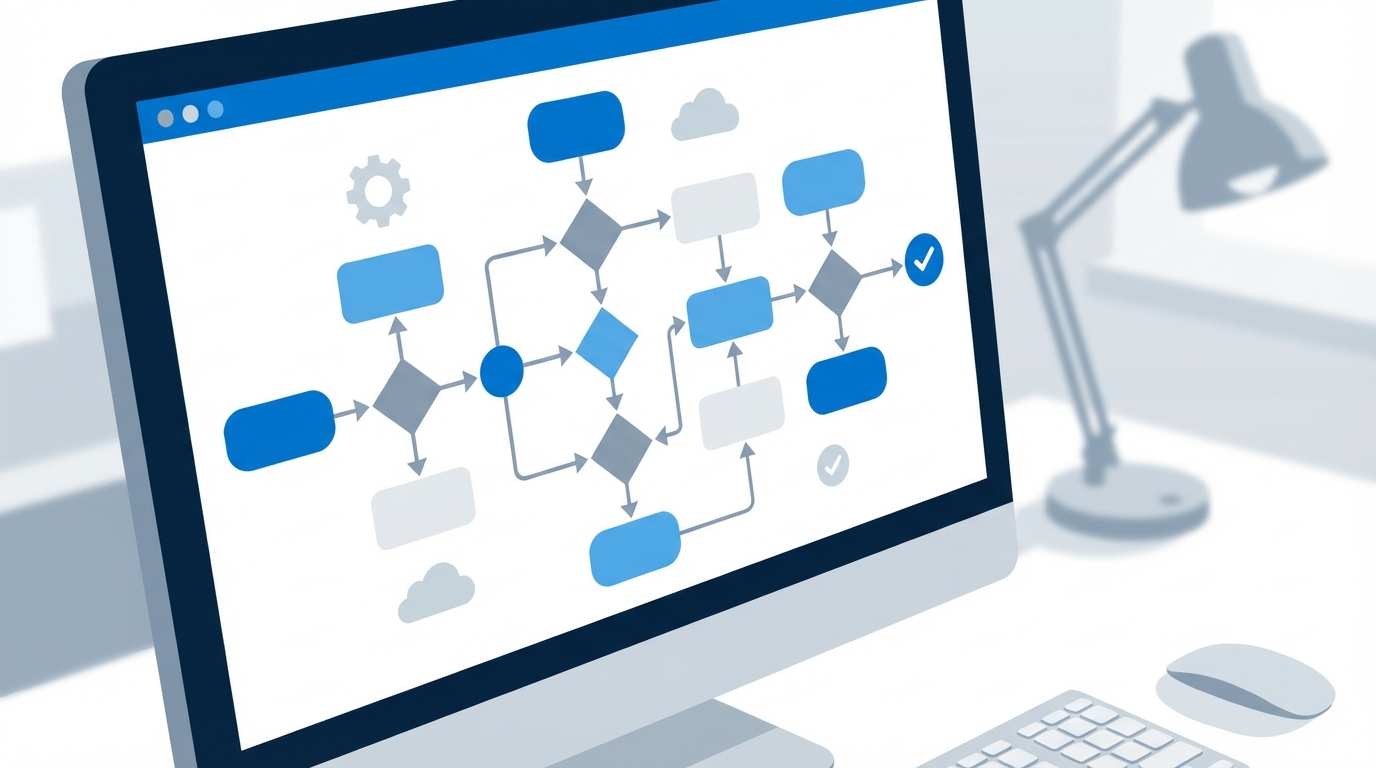
A clean and professional digital workflow diagram showing a business process map with decision nodes and logic paths.
Stop being an order taker and start asking why
Admins often get feature requests that sound straightforward on the surface. But without context, your solution will probably miss the mark. So, how do you fix this? Ask users to walk you through their typical day. When they ask for a specific field, ask what they plan to do with that data. Is it for a report? Is it just "nice to have"?
"Stop saying yes to every request immediately. Start saying 'yes, and here is how that affects our long-term maintenance.' It changes the whole conversation from a demand to a partnership."
Denise recommends a "yes, and" approach. Instead of a blunt "no" to a bad idea, offer alternatives. Explain the consequences of adding 50 new fields to the Lead object. Show them how it affects usability. This kind of communication is the heart of Salesforce business analysis. It builds trust and shows you care about the health of the system.
How AI changes the Salesforce business analysis game
Look, AI is everywhere now, but it doesn't replace the need for a human brain. In fact, it makes your analytical skills even more important. When you're looking at Agentforce use cases, you can't just flip a switch and hope for the best. You have to ask about governance, ethical guardrails, and what data is actually safe for the model to use.
Now, when I talk to stakeholders, I'm asking much tougher questions. Do you have an AI policy? What use cases should we actually prioritize? Admins have to be the ones to vet AI outputs and catch "hallucinations" before they mess up the business. Doing Salesforce business analysis in the age of AI means being the gatekeeper of quality and context.
Practical steps you can take today
- Start with user stories: Don't just list requirements. Write out "As a [user], I want to [action] so that [value]." It keeps everyone focused on the goal.
- Demo early and often: Use short sprints to show progress. It's much easier to fix a mistake in a demo than after you've gone live.
- Kill the technical debt: Scan your org for unused fields and old, clunky workflows. If nobody has used a field in six months, it's probably time for it to go.
- Build an AI framework: Document which data is sensitive and which use cases are allowed. Don't wait for a security breach to happen.
Key Takeaways for Salesforce business analysis
If you want to level up your career, start treating every request like a mini-consulting project. Here are the big points to remember:
- Be process-first, tech-second. The tool should fit the process, not the other way around.
- Use "yes, and" to explain trade-offs and technical debt to your stakeholders.
- AI requires more governance, not less. You are the one who provides the business context the AI lacks.
- Invest in change management. A perfect tool is useless if your users hate using it.
- Focus on measurable success. Will this save five hours a week? Will it reduce data entry errors by 20%?
At the end of the day, Salesforce business analysis is about being a bridge between the business's needs and the technology's capabilities. It's about being curious, thinking critically, and making sure that every automation you build actually makes someone's job easier. So, next time someone asks for a "quick fix," take a breath, grab a coffee, and start asking why.



Leave a Comment