

If you are feeling a bit overwhelmed by the AI hype, a solid Agentforce adoption framework is exactly what you need to keep your feet on the ground. We have all seen how fast things are moving in the Salesforce world lately, and it is easy to feel like you are falling behind if you don't have a bot running every corner of your org by next Tuesday. But here is the thing: successful AI rollout is not about speed, it is about being intentional.
Why a solid Agentforce adoption framework matters
The Agentforce adoption framework isn't some theoretical exercise cooked up in a lab. It is a practical way to manage the "people" side of technology change. I have seen teams try to jump straight into building complex agents without talking to a single user, and it usually ends in a mess of unused features and frustrated stakeholders. By following a structured path, you can show value early without breaking your production environment.
Think of it as a roadmap for your sanity. You start small, prove that it works, and then scale up once you have the trust of your team. It makes the whole process feel less like a giant leap into the dark and more like a series of manageable steps.
Breaking down the 5-step Agentforce adoption framework
Let's break this down into the five phases that actually work in a real-world setting. You don't have to do these all in one day, so take your time with each one.
1. Explore what's possible
This is your research phase. Before you touch a single setting, you need to know what the tool can actually do. Take a look at some practical Agentforce use cases to see how other companies are handling common problems. Don't worry about the "how" yet - just focus on the "what".
2. Get curious
Now, go talk to your users. Ask them where they are wasting time on repetitive tasks. One thing that trips people up is assuming they know what the business needs. Honestly, the best ideas usually come from the people who are in the CRM all day, every day. Gather that feedback and use it to pick one or two high-impact scenarios to start with.
3. Try it out
This is where it gets fun. Spin up a developer org or a sandbox and start clicking. I always recommend checking out the different Salesforce sandbox types to make sure you have a safe place to experiment. Build a quick prototype and show it to a small group. It doesn't have to be perfect; it just needs to show the potential.
4. Make it work
Once you have a prototype that people like, it is time to get serious about the configuration. This means cleaning up your data, setting up security guardrails, and making sure the agent has the right instructions. This is the "heavy lifting" phase where you turn a cool demo into a reliable tool.
5. Use it often
Roll it out, but don't just walk away. You need to watch the metrics and see if people are actually using it. Are they saving time? Are they getting frustrated? Use that data to keep making the experience better. AI is not a "set it and forget it" kind of project.
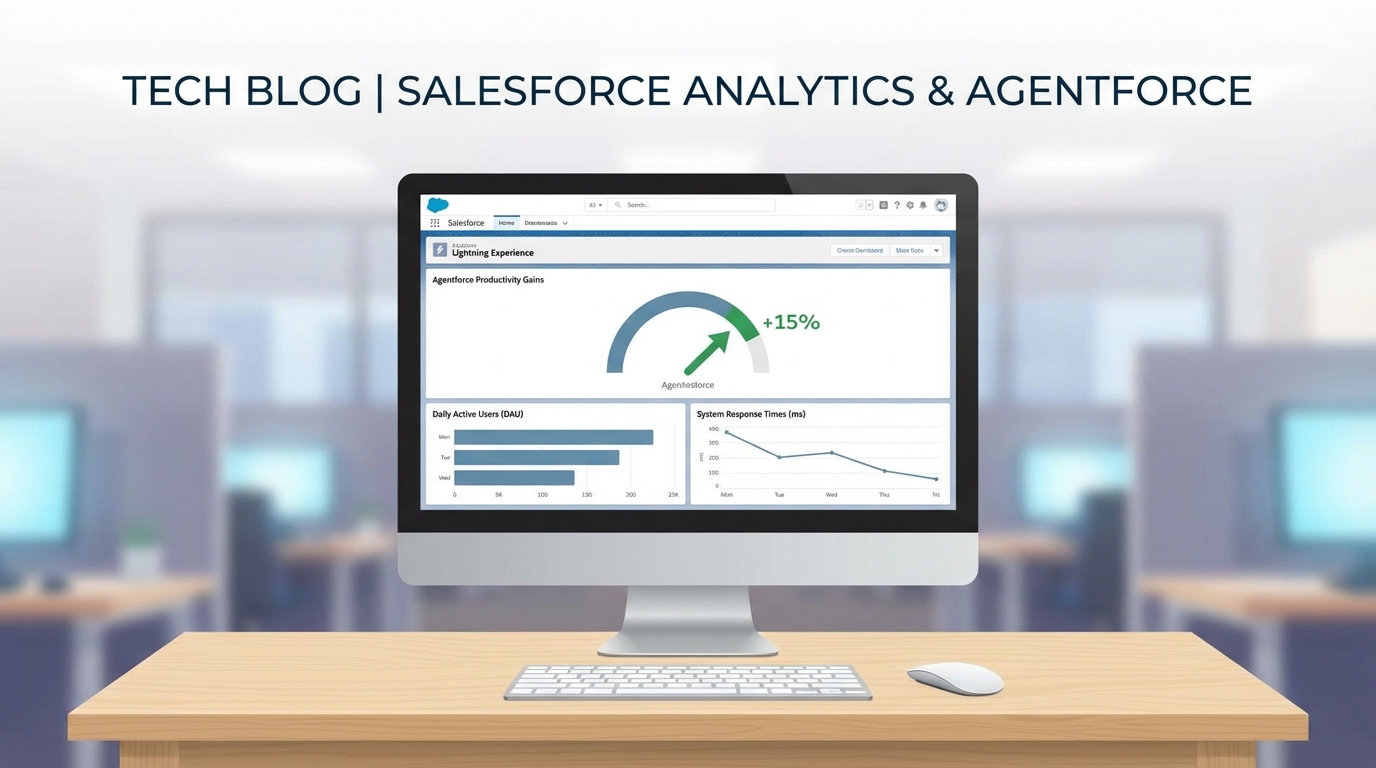
A realistic Salesforce dashboard interface displaying various data visualizations and performance metrics for AI adoption and user engagement.
Putting the Agentforce adoption framework into practice
So what does this actually mean for your day-to-day work? It means you shouldn't feel pressured to turn everything on at once. Most teams I work with get this wrong by trying to boil the ocean. They want a perfect agent on day one, but that's just not how it works. This Agentforce adoption framework was built by people who actually do the work, including MVPs and product teams who have seen what fails and what succeeds.
Pro tip: Your AI is only as good as your data. If your Account records are a mess, your agent is going to give messy answers. Spend some time on data hygiene before you go live.
If you want to see how this looks in action, there is a great video series called "Kate Clicks Through It." These are short, 10-minute videos that show you exactly how to build things like data libraries. It is much easier to learn when you can see someone else clicking through the same screens you are using.
Learning by doing with Kate Clicks Through It
The series is perfect for admins who want to get hands-on without sitting through a two-hour webinar. You can literally have the video open on one screen and your sandbox on the other. It covers things like using Org Check and setting up the foundations for your agents. It's the fastest way I've found to build up that "muscle memory" you need as an admin.
And look, it is okay to make mistakes in your trial org. That is how we learn. The framework gives you the permission to experiment safely so you don't have to worry about breaking things for your actual users while you are still figuring things out.
Key Takeaways for the Agentforce adoption framework
- Start with small, low-risk use cases to build momentum and trust.
- Always use a sandbox for your first few builds to keep production safe.
- Clean data is a requirement, not a "nice to have."
- Gather user feedback early and often - don't build in a vacuum.
- Measure your results so you can prove the ROI to your boss.
Following this Agentforce adoption framework helps you cut through the noise and deliver something that actually helps your company. It turns a scary technical rollout into a repeatable process that you can use over and over again as the technology evolves. For developers, it helps scope out what needs to be built, and for business users, it ensures the tools they get are actually helpful and secure. So, pick one small process today and just start exploring. You'll be surprised how quickly you can make progress when you have a plan to follow.




Leave a Comment