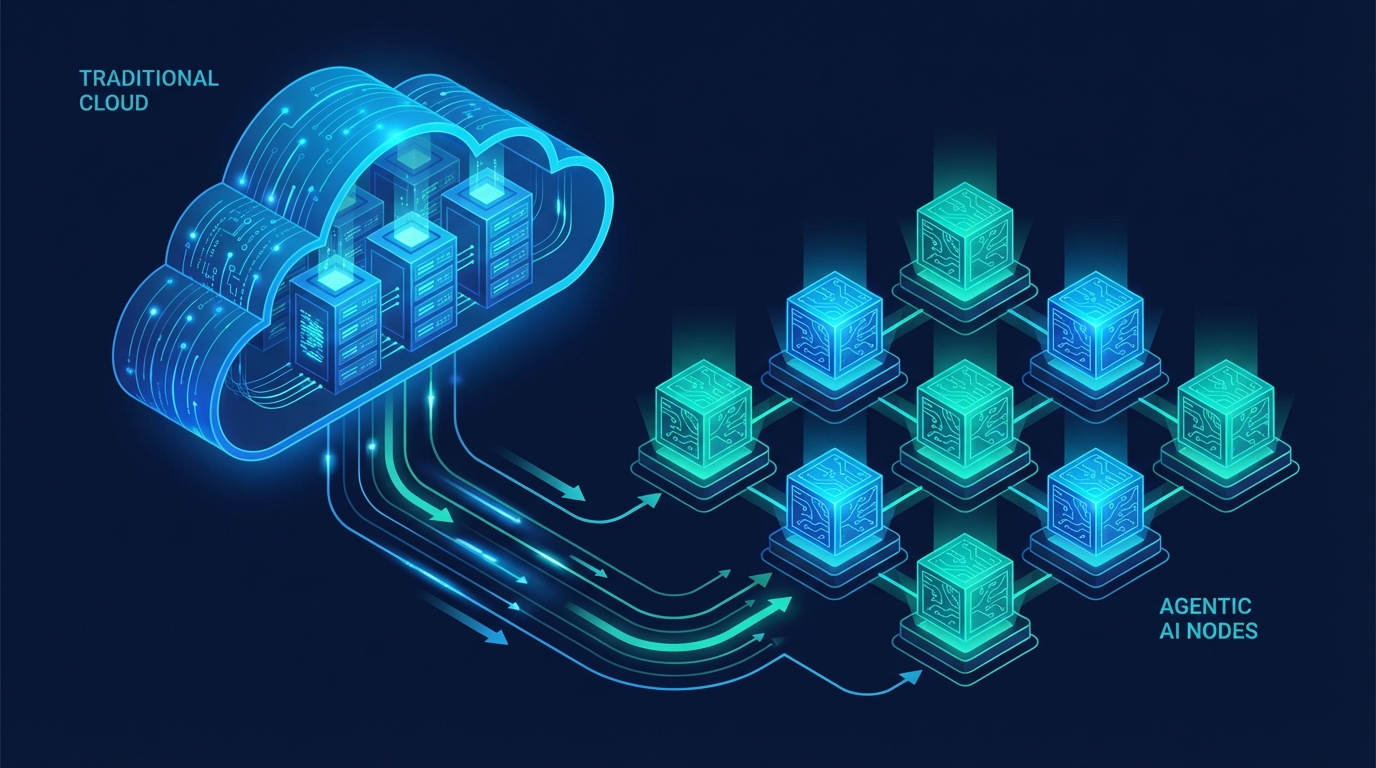
The announcement of the Salesforce Layoffs 2026 has sent shockwaves through the ecosystem, marking a definitive and somewhat jarring turn in the company’s pivot toward an AI-first future. In early February 2026, Salesforce confirmed a strategic workforce reduction of approximately 1,000 roles, a move that industry analysts are calling the “Agentic Paradox.” This restructuring highlights a stark contradiction: while the company is reporting record-breaking AI-driven revenue and the rapid adoption of its Agentforce platform, it is simultaneously trimming the very teams tasked with building and marketing this “Agentic Enterprise” vision.
For Marc Benioff, this isn’t just a cost-cutting measure; it is a fundamental re-engineering of how a software giant operates. The shift from a “Cloud-first” to an “Agent-first” philosophy means that the traditional headcount-to-revenue ratio is being rewritten. As Salesforce moves toward a model where digital labor—autonomous agents—performs the heavy lifting, the human workforce is being recalibrated to focus on “reasoning logic” rather than linear execution. This article explores the depths of this paradox, the technical shifts driving it, and what it means for the future of the Salesforce professional.
The February 2026 Restructuring: Who Was Impacted?
On February 9–10, 2026, Salesforce executed what many employees described as a “quiet” but surgical workforce reduction. Unlike the mass layoffs of 2023, these Salesforce Layoffs 2026 were highly targeted, focusing on specific strategic areas that Marc Benioff believes are now “mature enough” to be handled by the company’s own autonomous agents. The restructuring didn’t just hit back-office functions; it reached deep into the core of the innovation engine.
Impacted Teams and Strategic Sunsetting
- Agentforce AI Team: Ironically, some of the roles directly linked to the development and deployment of the flagship AI product were eliminated. This suggests that the initial “build phase” of Agentforce has transitioned into a “refinement phase” where the platform itself is being used to automate its own maintenance.
- Marketing & Product Management: As the “Agentic” brand transition completes its first major cycle, Salesforce has reduced headcount in teams responsible for the initial market education and go-to-market strategies.
- Data Analytics: Despite data being the “backbone” of AI, several roles in traditional data analytics were cut. This points toward a shift where Data Cloud (Data 360) and automated “Zero-Copy” architectures are replacing manual data munging and ETL maintenance.
- Heroku: Perhaps the most significant “technical sunset” in this round of layoffs is Heroku. The platform has officially been moved into a “sustaining engineering” phase. This means that while the service remains active for current users, development of new features has been halted to prioritize the unified Agentforce stack.
The decision to move Heroku into sustaining engineering signals the end of an era for many developers. For years, Heroku was the go-to for custom Salesforce extensions, but in the new Agentic era, Salesforce is pushing developers toward Agentforce DX and the Atlas Reasoning Engine as the primary ways to extend the platform’s capabilities.

The Leadership Shake-up: Out with the Old, In with the Agentic
The Salesforce Layoffs 2026 were accompanied by a significant executive reshuffle, signaling a move toward a more unified leadership structure. The departure of Adam Evans, the EVP and GM of AI who was instrumental in the birth of Agentforce, was a major surprise to the community. His exit marks a transition from the “visionary” phase of Salesforce AI to the “operational” phase.
Taking the reins is Joe Inzerillo, who now oversees the convergence of Agentforce and Slack. This move is strategic; Salesforce no longer views Slack as just a messaging app, but as the primary “UI for AI.” By placing Slack and Agentforce under unified leadership, Benioff is signaling that the future of work isn’t in a browser tab—it’s in a conversational interface where agents and humans collaborate in real-time.
The “6-for-5” executive replacement strategy—where six new leaders were appointed to replace five departing senior executives—indicates a desire for fresh perspectives in the “Reasoning Engine” space. These new leaders are tasked with breaking down the final silos between Sales, Service, and Marketing, creating a singular “Agentic Stack” that operates across the entire Customer 360 ecosystem.
“We are moving from a world of siloed products to a world of unified reasoning. Our agents don’t care if a task is ‘Sales’ or ‘Service’; they only care about the objective and the data available to achieve it.” — Internal Salesforce Memo, February 2026
Technical Deep Dive: The Agentforce 360 Stack
To understand why the Salesforce Layoffs 2026 are happening, we must look at the technology that is replacing those roles. The Agentforce 360 architecture is no longer just a “chatbot” wrapper; it is a sophisticated operating system for autonomous enterprise behavior. Central to this is the Atlas Reasoning Engine, which has evolved to handle over 11 million daily calls with near-human precision.
The Atlas Reasoning Engine and Agent Script
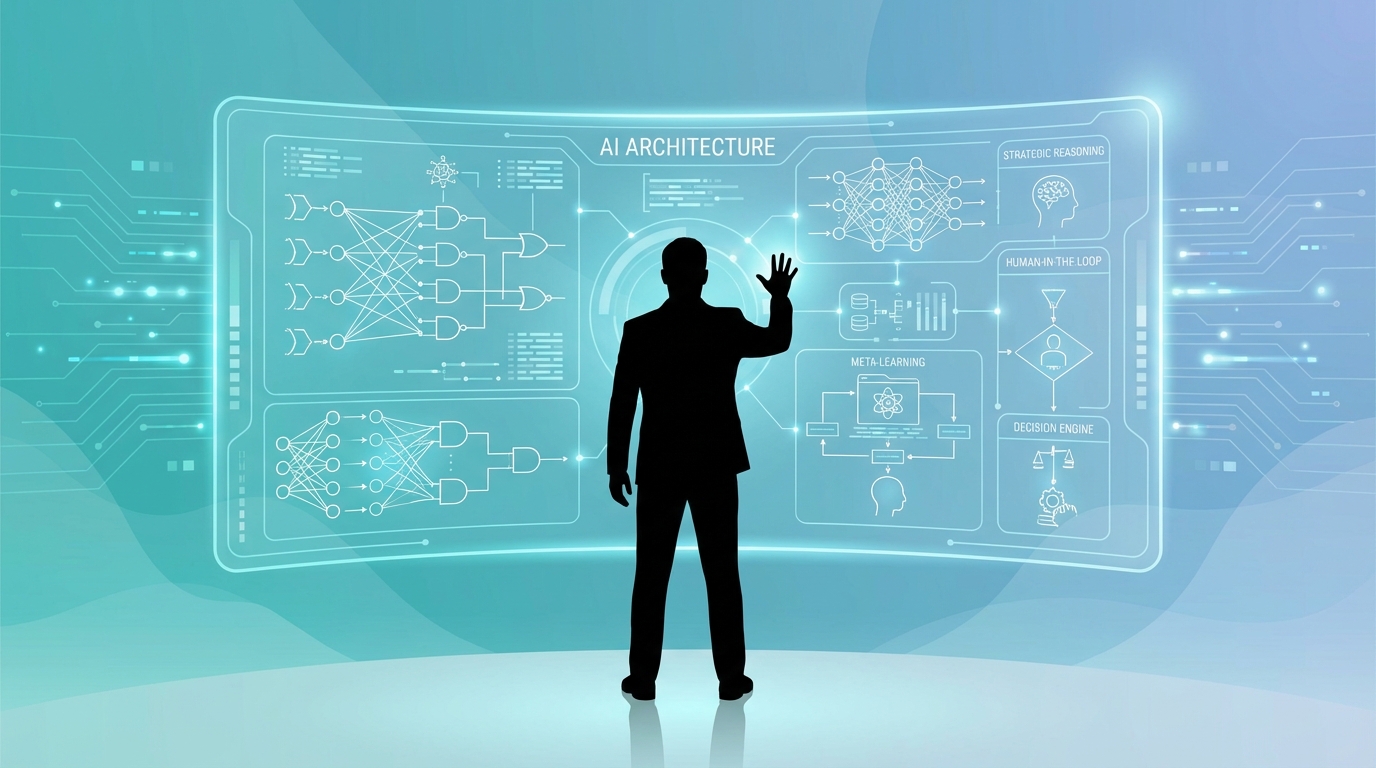
Unlike traditional bots that rely on deterministic “if-then” logic, the Atlas Reasoning Engine uses a multi-step cognitive process to evaluate customer intent, retrieve relevant data via RAG (Retrieval-Augmented Generation), and decide on the best course of action. This is made possible by Agent Script, a new JSON-based expression language introduced in late 2025. Agent Script allows developers to define complex agent behaviors and “human-in-the-loop” hand-offs with high precision, moving away from the limitations of legacy Flow logic.
Agentforce Voice and Federated Grounding
Another major technical leap is Agentforce Voice. By replacing legacy IVR systems with low-latency, voice-first AI agents, Salesforce has made thousands of traditional call center support roles redundant. These agents don’t just follow a script; they understand tone, sentiment, and context, providing a level of service that was previously only possible with human operators.
Furthermore, the shift toward Federated Grounding and “Zero-Copy” data strategies means that the need for massive data migration projects is disappearing. Agents can now access real-time data from external systems like Snowflake or BigQuery without traditional ETL replication. This is a core component of the “Agentic Enterprise,” ensuring that every AI decision is grounded in the “Live Truth” of the business. For a deeper look at how this works, see our guide on connecting Agentforce to Data Cloud for grounding.

The End of Linear Logic: Expert Perspectives on the Admin Shift
The Salesforce Layoffs 2026 aren’t just impacting Salesforce employees; they are forcing a massive evolution in the skillsets of Salesforce Admins and Developers. Ben McCarthy (Salesforce Ben) has noted that the role of the Admin is becoming “indistinguishable” from its 2020 version. The focus is no longer on building flows, but on defining Topics and Actions for the reasoning engine.
From Flow Builder to Reasoning Logic
In the past, an Admin would spend hours mapping out every possible branch of a customer interaction in Flow Builder. Today, the “Agentic Admin” defines the boundaries of an agent’s “Topic” and provides it with a library of “Actions” (Apex classes or Flows). The Atlas engine then decides which action to use based on the conversation. This shift requires a move from “Linear Logic” to “Reasoning Logic.”
The “Shovel Maker” Reality and Vibe Coding
MVP Andy Engin Utkan highlights a “Shovel Maker” reality where Salesforce is selling the tools for the AI gold rush, but many customers are struggling with the high cost of “Flex Credits.” There is also the rising trend of “Vibe Coding”—using AI to generate LWC and Apex code. While this speeds up development, architects warn that it requires more governance to prevent “technical debt at the speed of light.” As we discussed in our article on the gift of the Admin, the most valuable contribution an Admin can make now is clarity—ensuring that the “instructions” given to AI are unambiguous and ethically sound.
By the Numbers: The Economic Reality of Digital Labor
The data behind the Salesforce Layoffs 2026 tells a story of aggressive growth and efficiency. As of Q3 FY2026, Salesforce’s Agentforce and Data 360 segments reached a staggering $1.4 billion in Annual Recurring Revenue (ARR), representing a 114% year-over-year increase. This financial success is the primary driver behind the workforce restructuring; why hire more people when the software is generating record profits with fewer humans?
Adoption and Usage Stats
- 18,500 Agentforce Deals: Salesforce has closed nearly 20,000 deals for its AI platform, with 50% of those being paid enterprise contracts.
- 3.2 Trillion Tokens: The volume of data processed through the LLM gateway signals that Agentforce is in high-scale production, not just experimental pilots.
- Customer Zero: Salesforce handles 50% of its own internal support tickets using Agentforce, achieving an 83% resolution rate.
The Intelligence Gap
However, the transition isn’t perfect. A 2025 study found that LLM agents still failed 65% of complex, multi-turn CX tasks. This “Intelligence Gap” is where the remaining human workforce must focus. While agents can handle “Where is my order?” or “Reset my password,” they struggle with nuanced negotiations or multi-layered problem solving that requires empathy and high-level strategic reasoning.
Despite these gaps, the ROI for early adopters is undeniable. Wiley reported a 213% ROI by using Agentforce to handle Tier-1 student inquiries, and Sonance reduced customer response times by 65% through an AI concierge. These benchmarks make the “Agentic Paradox” an easy sell to shareholders, even if it creates uncertainty for the workforce.

Strategic Best Practices for the Agentic Era
Navigating the world after the Salesforce Layoffs 2026 requires a new strategic playbook. Organizations that succeed in the “Agentic Era” will be those that prioritize data integrity over flashy AI features. The community consensus is a “Data-First, Agent-Second” approach.
The Phased Rollout Strategy
Experts recommend a 4-12 week phased rollout for enterprise agents. Start with a 2-week discovery phase to identify high-volume, low-risk processes. Don’t try to automate your entire sales cycle on day one. Instead, focus on “micro-tasks” where the agent can provide immediate value with zero risk of “hallucination” or brand damage.
Action Descriptions are the New Code
In the Atlas engine, the “Description” field in a Flow or Apex action is no longer just documentation—it is functional code. The reasoning engine reads these descriptions to understand when and how to “pick up a tool.” If your descriptions are vague, the agent will fail. This makes technical writing and semantic clarity more important than ever for Salesforce professionals.
Zero-Copy and Data 360
Leverage Data Cloud to create a “unified profile” of your customer. By using Zero-Copy architecture, you ensure your agents are grounded in “Live Truth.” This reduces latency and ensures that the agent doesn’t make decisions based on stale data synced 24 hours ago. This is the foundation of a truly “Autonomous Enterprise.”
Conclusion: Navigating the Workforce Restructuring
The Salesforce Layoffs 2026 represent a watershed moment in the history of the tech industry. The “Agentic Paradox”—achieving unprecedented growth while reducing headcount—is the new reality of the AI-driven economy. Marc Benioff’s vision for the autonomous enterprise is no longer a futuristic concept; it is a functioning business model that is currently being scaled across the globe.
For Salesforce professionals, the message is clear: the era of linear, deterministic configuration is ending. The future belongs to those who can master the “Reasoning Logic” of the Atlas engine, the data orchestration of Data Cloud, and the strategic governance of autonomous agents. While the restructuring is painful for many, it also opens up a new frontier of high-value work for those willing to evolve. As we move deeper into 2026, the question is no longer whether AI will replace roles, but how quickly humans can adapt to lead the agents that are now doing the work.
Are you ready to transition your skills for the Agentic Era? Start by exploring our technical deep dives on the Atlas Reasoning Engine and Data Cloud integration to stay ahead of the curve in this rapidly changing ecosystem.
Key Takeaways (TL;DR)
- The Layoffs: Salesforce cut ~1,000 roles in February 2026, targeting Agentforce, Marketing, and Heroku teams.
- The Paradox: These cuts happened despite Agentforce reaching $1.4B in ARR, signaling a shift toward digital labor efficiency.
- Heroku Shift: Heroku has moved into “sustaining engineering,” with new development halted in favor of the Agentforce stack.
- New Leadership: Joe Inzerillo now leads the unified Agentforce and Slack division, emphasizing conversational AI.
- The Skill Shift: Salesforce professionals must move from “Linear Logic” (Flows) to “Reasoning Logic” (Topics and Actions).
- The Gap: AI still fails 65% of complex tasks, highlighting the continued need for high-level human oversight and governance.


Leave a Reply