
The recent news regarding the Salesforce layoffs 2026 has sent a clear signal that the CRM giant is doubling down on its commitment to an autonomous, AI-driven future. In early February, the company confirmed a workforce reduction of approximately 1,000 positions, a move that reflects the complex "Agentic Paradox" currently facing the tech industry.
While Salesforce continues to celebrate record-breaking growth and the massive adoption of its Agentforce platform, it is simultaneously restructuring the teams that built these very tools. This shift represents a transition from a traditional "Cloud-first" mentality to an "Agent-first" philosophy. For Marc Benioff, the goal is to optimize the headcount-to-revenue ratio by leveraging digital labor to handle routine execution.
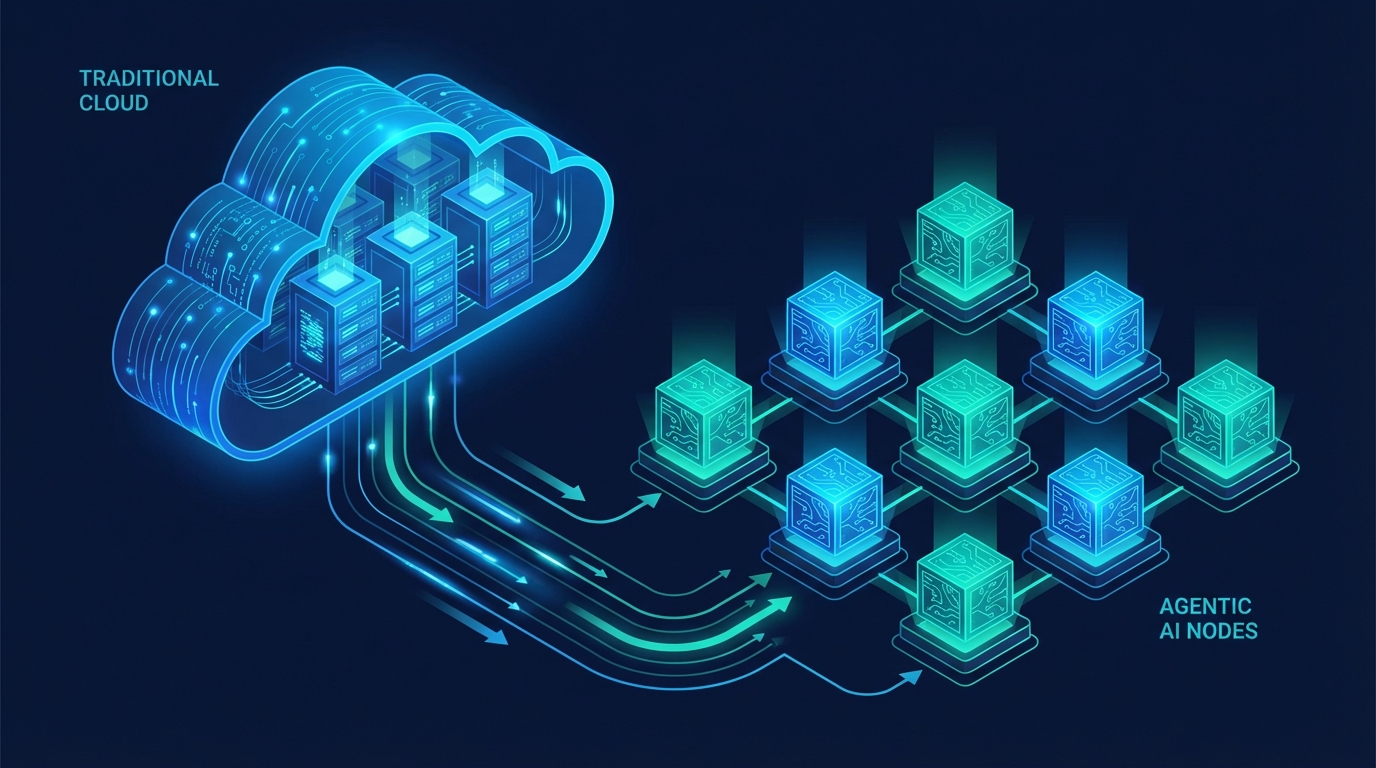
Professional tech illustration of a cloud network morphing into a structured grid of glowing AI agent nodes, symbolizing the transition to digital labor.
Analyzing the Impact of the Salesforce Layoffs 2026
The workforce reduction that took place on February 9–10, 2026, was described by many insiders as a surgical strike rather than a broad downsizing. These Salesforce layoffs 2026 targeted specific departments where the company believes its internal AI agents have reached a level of maturity capable of handling operational tasks. The restructuring suggests that the "build phase" of many AI initiatives has now moved into a "maintenance and refinement" stage.
Teams Affected by the Restructuring
- Agentforce AI Development: Ironically, some roles within the flagship AI division were eliminated. This suggests that the Agentforce Atlas Reasoning Engine is now being used to automate portions of its own code maintenance and deployment.
- Marketing and Go-To-Market: With the initial wave of "Agentic" branding now complete, Salesforce has reduced staff in teams focused on early-stage market education.
- Traditional Data Analytics: As the company pushes "Zero-Copy" architectures and Data Cloud, roles centered on manual ETL (Extract, Transform, Load) processes are being phased out in favor of automated data grounding.
The End of an Era for Heroku
Perhaps the most surprising technical news accompanying the Salesforce layoffs 2026 is the status of Heroku. The platform has officially entered a "sustaining engineering" phase, meaning that while the service remains live for existing customers, active development of new features has effectively ceased. Salesforce is now steering developers toward Agentforce DX as the primary environment for building platform extensions.
"The shift we are seeing isn't about doing less; it's about doing more with autonomous agents. The human role is evolving from the 'doer' of tasks to the 'architect' of reasoning logic."

Modern tech illustration of a human architect interacting with a complex holographic neural network and logic flow, representing the shift from task execution to AI system design.
The Strategic Vision Behind the Salesforce Layoffs 2026
The Salesforce layoffs 2026 were not just about headcount; they were accompanied by a massive executive shake-up designed to unify the company’s AI and collaboration arms. The departure of Adam Evans, the former EVP and GM of AI, marks the end of the visionary development cycle and the beginning of the operational era. This transition ensures that AI is no longer a standalone product but the core engine of the entire ecosystem.
Unifying Slack and Agentforce
Joe Inzerillo has been tapped to lead the convergence of Slack and Agentforce, signaling that Salesforce views the conversational interface as the "UI for AI." By merging these leadership tracks, Benioff is betting that the future of work will happen within Slack channels where humans and agents collaborate seamlessly. This move validates many of the Agentforce use cases currently being adopted by early enterprise movers.
The "6-for-5" Executive Strategy
In a unique twist on corporate restructuring, Salesforce implemented a "6-for-5" leadership replacement strategy. While five senior executives departed during the reorganization, six new leaders with deep backgrounds in autonomous systems and reasoning logic were brought in. This confirms that the company is not just shrinking, but actively swapping traditional software talent for AI-specialized leadership.

A minimalist tech illustration showing a transition of leadership, with traditional structural elements evolving into advanced, glowing AI-driven components along a futuristic horizon.
What This Means for Salesforce Professionals
The Salesforce layoffs 2026 serve as a wake-up call for administrators, developers, and consultants. The demand for manual configuration and linear coding is declining, while the need for professionals who can design, ground, and audit AI agents is skyrocketing. To stay relevant, professionals must pivot their skill sets toward Data Cloud integration and the nuances of the Atlas Reasoning Engine.
As the platform evolves, the focus is shifting toward "reasoning logic" rather than simple automation. This means understanding how to provide the right context to agents so they can perform complex tasks without human intervention. The ecosystem is moving fast, and those who embrace the "Agentic" transition will find themselves in high demand despite the shifting corporate landscape.
Key Takeaways
- Targeted Reductions: The layoffs affected roughly 1,000 roles, primarily in areas where AI can now perform operational tasks.
- Heroku's Sunset: Heroku is moving into sustaining engineering, signaling a move toward unified Agentforce development tools.
- Leadership Pivot: The exit of Adam Evans and the rise of Joe Inzerillo highlight a focus on Slack as the primary interface for AI agents.
- The Agentic Paradox: Salesforce is achieving record AI revenue while simultaneously reducing the human headcount required to support it.
Conclusion
The Salesforce layoffs 2026 represent a pivotal moment in the company's history. While workforce reductions are always difficult, this move highlights a fundamental shift in the tech industry: the transition from human-led execution to agent-led autonomy. For those working within the Salesforce ecosystem, the message is clear—the future belongs to those who can master the art of agent orchestration.
Are you ready to transition your career for the Agentic era? Start by exploring the latest AI certifications and hands-on projects to ensure your skills remain indispensable. Stay tuned to our blog for the latest updates on Salesforce strategy and technical deep dives.


Leave a Comment