
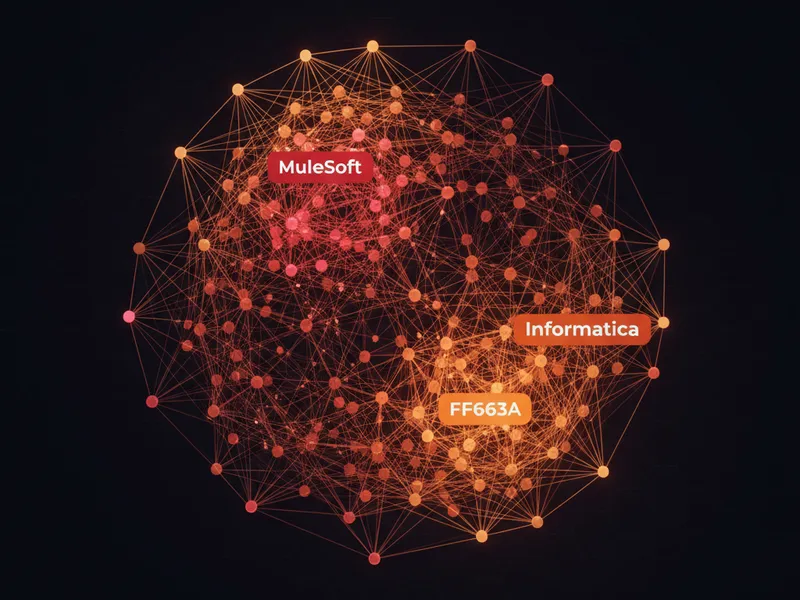
Analyzing a Hybrid Salesforce Territory Assignment
This scenario presents a complex account assignment within Salesforce Sales Cloud territory management, specifically focusing on the interplay between integration platforms: MuleSoft and Informatica. The key challenge for technical architects, solution architects, and account executives is aligning the technological approach (MuleSoft vs. Informatica) with the existing Salesforce spend and industry vertical.
Territory Profile Breakdown
The provided territory exhibits the following characteristics:
- MuleSoft Focus: Described as a greenfield MuleSoft patch. This implies net-new opportunities for API-led connectivity, integration modernization, or potentially new Anypoint Platform adoption within the assigned accounts, irrespective of current integration tools.
- Informatica Footprint: Contains 4 Informatica install base accounts. These accounts already leverage Informatica (likely PowerCenter or IICS) for data integration. This presents a competitive sales scenario or an opportunity for hybrid integration strategy.
- Industry Verticals: The accounts are split evenly:
- 50% Staffing Companies.
- 50% Law Firms.
- Total Spend: Approximately $14M in total Salesforce spend across these accounts.
Technical and Strategic Implications
For a technical or solution architect, this territory requires a nuanced approach that acknowledges the existing state of integration infrastructure within the client organizations.
1. MuleSoft Greenfield Strategy
Greenfield MuleSoft sales should target areas where Salesforce adoption is expanding or where existing, brittle integrations are hindering agility. Key technical discussion points include:
- API-Led Connectivity Adoption: Demonstrating how MuleSoft can expose Salesforce data securely via API layers, decoupling systems.
- Modernization: If the $14M Salesforce spend indicates recent large-scale CRM implementations, architecture review should focus on system interaction patterns (e.g., replacing point-to-point ETL with managed APIs).
- Relevant Use Cases: Staffing firms often need real-time candidate/client synchronization; law firms need secure document and case management integration.
2. Informatica Install Base Strategy (Competitive/Coexistence)
Dealing with existing Informatica installations requires understanding the existing data flows and avoiding direct, immediate confrontation unless a clear migration path is viable.
- Competitive Overlay: If Salesforce is pushing integration modernization, position MuleSoft as the strategic platform for new application integration and Salesforce connectivity, while acknowledging Informatica's role in large-scale data warehousing or legacy ETL.
- Coexistence Strategy: MuleSoft and Informatica can coexist. MuleSoft (via Anypoint Platform) can act as the system-of-engagement integration layer, utilizing Informatica for heavy, batch-oriented data movement to enterprise data warehouses, for example.
- Governance and Security: Highlight MuleSoft's unified governance capabilities for API management, contrasting it with the often disparate management of legacy integration tools.
3. Vertical Alignment ($14M Spend)
The industry split dictates required functional expertise and data sensitivity handling:
- Staffing (High Volume/Velocity): Focus on high-throughput, low-latency integrations necessary for placing personnel and managing contracts. This aligns well with MuleSoft's event-driven and API capabilities.
- Law Firms (Security/Compliance): These organizations demand stringent security and data residency controls (e.g., handling client PII/privilege). Salesforce Shield integration combined with tightly governed MuleSoft APIs is critical here.
Solution Fit Assessment
The territory offers a strong solution fit if the strategy emphasizes:
- Targeted Greenfield: Using MuleSoft to solve immediate pain points arising from the new or expanded Salesforce footprint.
- Respecting Legacy State: Strategically targeting integration modernization where Informatica is weak (e.g., modern mobile/web experiences, decentralized microservices) rather than attempting immediate replacement of established ETL pipelines.
Key Takeaways
- This territory mandates expertise in both MuleSoft API strategy and Informatica ecosystem awareness for effective account navigation.
- The $14M Salesforce spend represents the core investment driving new integration requirements.
- Staffing and Legal verticals demand distinct architectural priorities: velocity for staffing, security for legal.
- Successful penetration relies on positioning MuleSoft as the strategic, application-facing integration layer while understanding Informatica’s existing role in the data fabric.




Leave a Comment