
Agentforce & AI articles
57 articles · AI agents
 Agentforce & AI
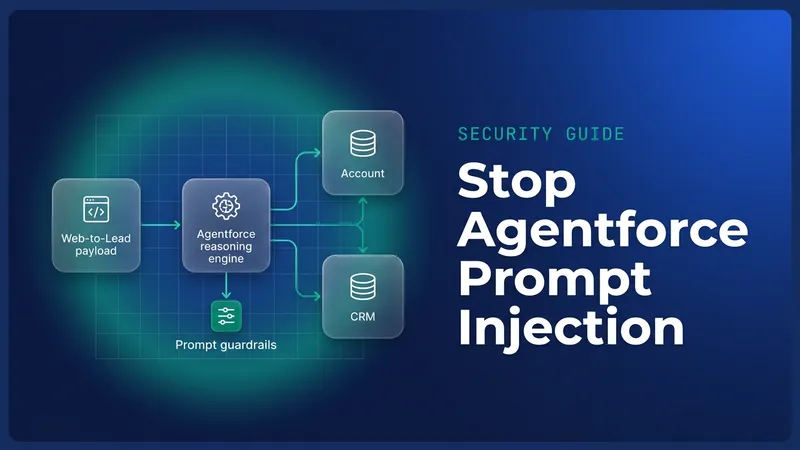
Agentforce Prompt Injection: Hardening After SalesBleed
SalesBleed turned a Web-to-Lead form into a zero-click leak of Account data through Agentforce prompt injection. The...
 Agentforce & AI
Salesforce Koa: What a CRM Reasoning Model Changes in Your Org
Koa is Salesforce's first CRM reasoning model, post-trained on NVIDIA Nemotron 3 Super and announced at Dreamforce '26....
 Agentforce & AI
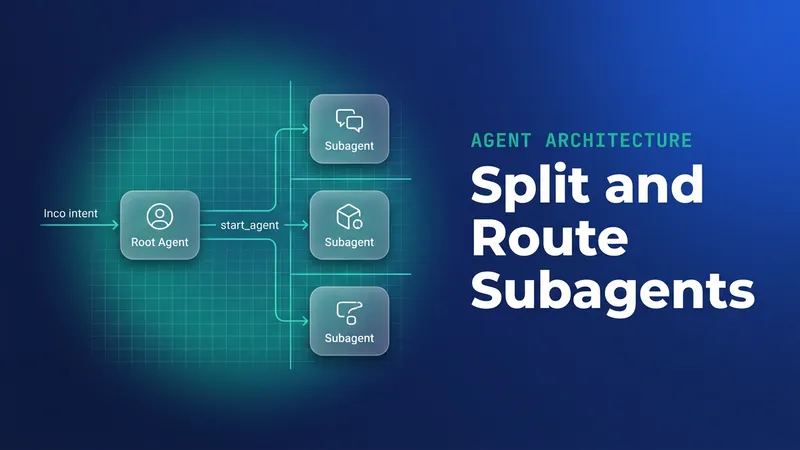
Agentforce Subagents: Split and Route an Overloaded Agent
A decomposition and routing guide for architects whose single Agentforce agent has outgrown itself. Covers start_agent,...
 Agentforce & AI
Salesforce Winter '27 Marketing Cloud Updates for Developers
Winter '27 brings a fair amount to Marketing Cloud for developers and admins: new Agentforce agents for marketing work,...
 Agentforce & AI
Salesforce AI: DigitalOcean Managed AI Path
DigitalOcean's managed AI and Functions as a Service (FaaS) are a credible alternative to Salesforce's native AI...
 Agentforce & AI
Private Connect for Secure AI with Agentforce
Private Connect gives Agentforce and Data 360 a private, audited network path into customer data, which is what gets AI...
 Agentforce & AI
Reliable Production AI: Durable Workflows
Getting AI from prototype to production is an orchestration problem as much as a prompting one. Durable workflows keep...
 Agentforce & AI
Salesforce Claude Integration: Developer Guide
Salesforce's deepening integration with Anthropic's Claude is shifting its AI strategy. Here is how Claude is becoming...
 Agentforce & AI
Salesforce Data Cloud: Programmatic Implementation with Claude
A programmatic run at Salesforce Data Cloud identity resolution with Claude Code and the Metadata Configuration...
 Agentforce & AI
Salesforce Data Cloud Implementation Challenges Explained
Salesforce Data Cloud is complex because of how it was layered together over time, blending CDP, data lakehouse, and...
 Agentforce & AI
Agentforce Pricing: New Resolution-Based Model Explained
Salesforce now bills Agentforce per resolution. Here is what counts as a resolution, what one costs, and how the model...
 Agentforce & AI
AI Data Integration: Informatica's Pipeline Dev Time Reduction
Informatica used AI and prompt engineering to cut data integration pipeline development from days to minutes. Their...