
I've been keeping a close eye on the latest Salesforce AgentExchange trends since the platform went live in March 2025. Honestly, when it first launched, a lot of us wondered if it would just be another marketplace for bloated apps we don't really need. But after six months of watching the data, it's clear that isn't the case. We're seeing a move toward modular, "snackable" AI components that actually solve small, annoying problems without requiring a massive overhaul of your org.
If you're already looking at practical Agentforce use cases, you know that building everything from scratch is a pain. The AgentExchange is basically a shortcut. Instead of building a full app, you can just grab a specific prompt or action and plug it into Sales or Service Cloud. It's a much more realistic way to get started with AI than trying to boil the ocean on day one.
Breaking down the latest Salesforce AgentExchange trends
The growth we've seen between March and October is pretty wild. We went from 55 listings to 122 in about six months. That's over 120% growth. But the numbers don't tell the whole story. The way people are using the marketplace has shifted through three distinct phases. First, there was the "let's throw everything at the wall" phase in the spring. Then, over the summer, things quieted down as Salesforce and partners cleaned up the junk. Now, we're in an acceleration phase where the components are actually high quality.
So where is the heat? Sales listings are leading the pack, but analytics is the one to watch. It tripled in size over the last few months. This tells me that teams are moving past basic chatbots and starting to want AI that can actually dig into their data and tell them something useful. I've seen teams get way more excited about a tool that predicts churn than a tool that just summarizes a meeting.
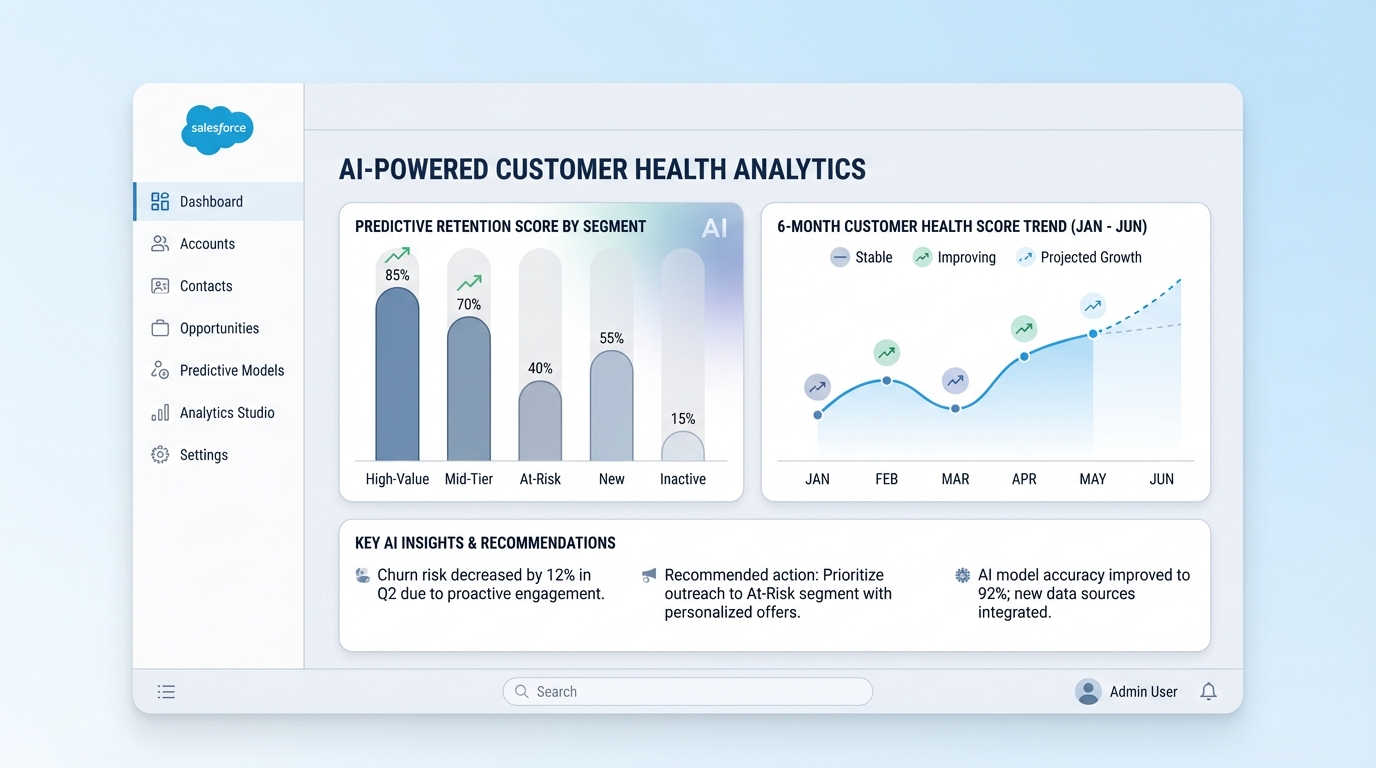
A clean, professional Salesforce-style dashboard mockup displaying predictive analytics charts and customer data trends.
How Salesforce AgentExchange trends affect your roadmap
Look, I've seen plenty of "next big things" come and go in the Salesforce ecosystem. But the reason these Salesforce AgentExchange trends matter for admins and devs is that they lower the barrier to entry. You don't have to be a prompt engineering expert to get value out of Agentforce anymore. You can find a template that someone like Breadwinner or Salesforce Labs has already vetted and start from there.
One thing that trips people up is thinking they need a massive budget for this. You don't. Because these are modular components, you can test a single action in a pilot project. If it works, great. If it doesn't, you haven't wasted three months of dev time. It's all about incremental wins. And if you're worried about how the data actually connects, you should definitely look into Agentforce RAG grounding to make sure your agents aren't just making things up.
In my experience, the teams that succeed with AI aren't the ones trying to automate their entire business at once. They're the ones finding one high-impact prompt for sales follow-ups and getting it right before moving on to the next thing.
Practical tips for navigating the marketplace
Here's the thing: just because a component is on the Exchange doesn't mean it's perfect for your specific business logic. You still need to do your homework. I always recommend starting with a high-impact, low-risk use case. Case triage is a classic example. It's easy to measure if it's working, and it saves your team a ton of manual clicking right away.
Also, don't panic if you see a listing disappear or change categories. During those "cleanup" months I mentioned earlier, a lot of partners were just retagging their stuff to make it easier to find. It's usually a sign the marketplace is maturing, not that the tech is failing. Keep an eye on the "Commerce" category too. It's small right now, but it's starting to pick up steam as more companies look for ways to automate the buying process.
Key Takeaways
- Modular is better: Focus on individual prompts and actions rather than looking for a "do-it-all" app.
- Sales and Analytics lead: These are the most mature categories right now, so they're the safest places to start.
- Cleanup is normal: Marketplace fluctuations usually mean better quality control, not a lack of interest.
- Start small: Use agent templates to standardize how your AI behaves across different departments.
- Watch the publishers: Trusted names like Salesforce Labs are great for finding free, reliable components to test.
The bottom line? These Salesforce AgentExchange trends show that AI is becoming a standard part of the admin toolkit, not just a fancy add-on for enterprise teams. We've moved past the experimental phase. Now it's about finding the right pieces to help your users move faster. If you haven't poked around the Exchange in a few months, it's probably time to go back and see what's new. You might find exactly what you were planning to spend the next month building yourself.




Leave a Comment