
What the Agentic Enterprise actually means for your org
Dreamforce 2025 just wrapped up, and the big takeaway is clear: we've moved past simple chatbots. Salesforce is betting everything on the Agentic Enterprise, a model where AI agents don't just answer questions but actually execute work alongside your team. It's a shift from AI as a sidekick to AI as a functional part of the workforce.
Look, I've seen plenty of "AI hype" over the last few years, but this feels different. We're moving away from isolated experiments and toward a world where agents handle the heavy lifting in sales, service, and even custom dev work. But here's the thing: it only works if your data is actually ready for it. If your CRM is a mess, your agents will be too.
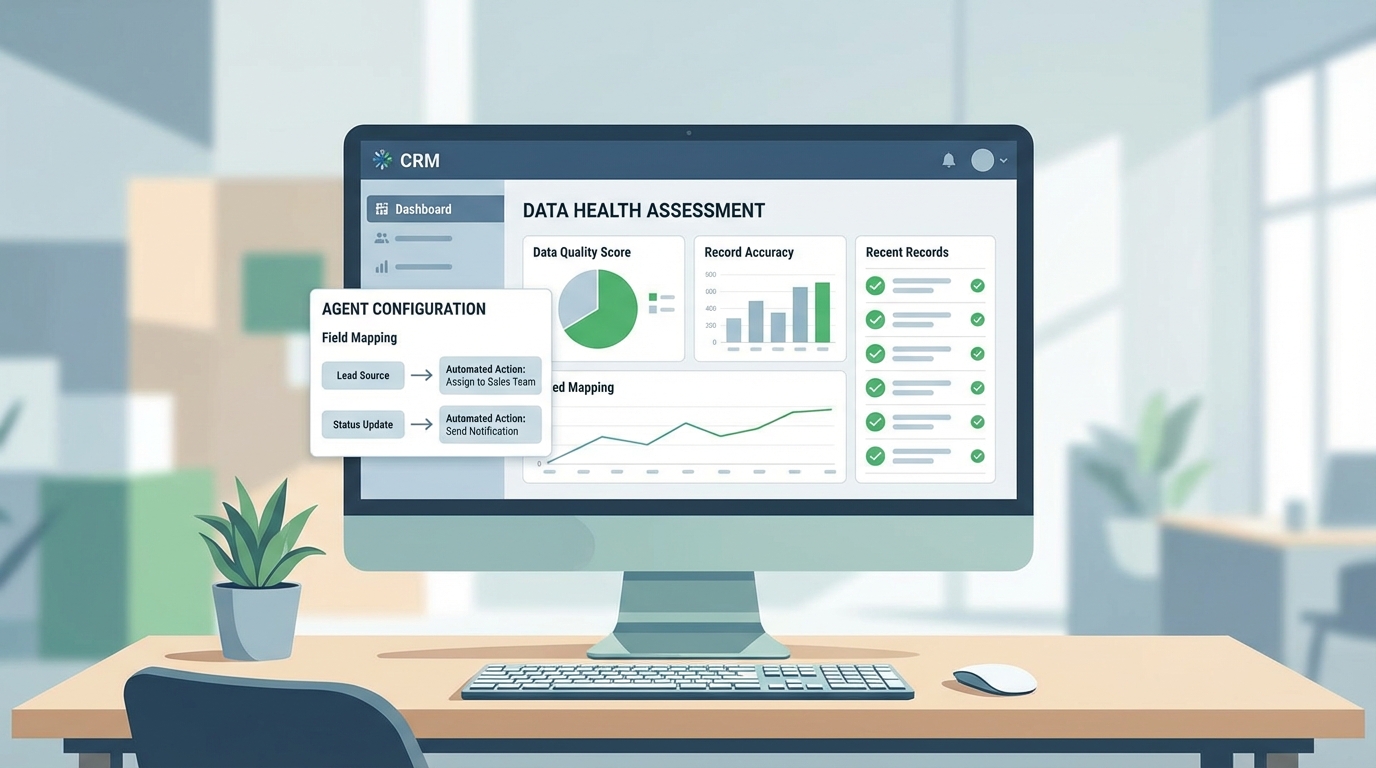
A professional UI mockup of a Salesforce dashboard showing organized data structures and AI agent configuration settings.
Why the Agentic Enterprise isn't just marketing fluff
In my experience, the biggest hurdle with AI has always been "hallucinations" or agents that just don't have enough context to be useful. The announcements this year aim to fix that. Salesforce is positioning the Agentic Enterprise as a way to give these agents supervised autonomy. You aren't just turning them loose; you're giving them a set of rails to run on.
So what does this actually mean for you? It means your service agents might soon be handling complex multi-step refunds or scheduling without a human ever touching the keyboard. But you'll still have the oversight to make sure things don't go off the rails. It's about scale, not just speed. If you're curious about how this looks in the real world, I've looked at some practical Agentforce use cases that show what's actually possible right now.
The new toolkit: Agentforce 360 and Vibes
The tech behind this shift is pretty interesting. Agentforce 360 acts as the "brain" that connects your agents to your actual workflows. It's not just a standalone app; it's baked into the platform. Then there's "Agentforce Vibes," which is basically what they're calling "vibe coding." You use natural language to describe what you want to build, and the platform does the heavy lifting.
Data Cloud is still the engine
I've said it before and I'll say it again: your AI is only as good as your data. Salesforce is doubling down on Data Cloud enhancements to handle unstructured data - think PDFs, emails, and call transcripts. This is huge because that's where most of your company's actual knowledge lives. If you want to get serious about this, you'll need to understand how RAG works in Salesforce to ground your agents in real, trusted data.
One thing that trips people up: they try to build the "perfect" agent on day one. Don't do that. Pick a single, annoying process - like case routing or lead qualification - and start there. Prove it works before you try to automate the whole department.
How to prepare for the Agentic Enterprise shift
So, where do you start? Don't just go out and buy every new license. You need a plan. Here's how I'd approach it if I were sitting in your shoes:
- Audit your processes: Find the bottlenecks. Where are your people doing repetitive, "robotic" work? Those are your best candidates for agents.
- Fix your data: Seriously. If your Account names are all over the place and you have thousands of duplicates, your agents will struggle. Clean it up now.
- Define the guardrails: Who gets to build agents? Who monitors them? You need a governance plan before you hit "go."
- Start a pilot: Pick one use case with clear KPIs. Maybe it's reducing handle time by 10% or automating initial lead outreach.
Key Takeaways
- The Agentic Enterprise focuses on AI agents that actually perform tasks, not just provide chat summaries.
- Agentforce 360 and Agentforce Vibes are the primary tools for building and managing these agents.
- Data Cloud is mandatory for success, as it provides the context agents need to be accurate.
- Governance and human oversight are more important than ever to keep AI-driven workflows under control.
The road ahead
Dreamforce 2025 has given us a lot to think about, but the path forward is all about execution. The Agentic Enterprise isn't something that happens overnight. It's a gradual shift in how we think about the platform. Start small, focus on your data quality, and don't be afraid to experiment with a few low-risk use cases first. The tech is finally catching up to the vision, so now it's on us to build something useful with it.



Leave a Comment