

What Exactly is Salesforce Cascade Delete?
Ever deleted a record and watched its children vanish into thin air? That's the Salesforce cascade delete in action. It's a powerful tool for keeping your data clean, but if you don't respect it, it'll bite you when you least expect it.
Look, we've all been there. You're cleaning up some old data, you hit delete on a parent record, and suddenly your Recycle Bin is overflowing because you forgot about the related items. Understanding this behavior isn't just for passing an exam - it's about making sure you don't accidentally wipe out a year of sales history.
Relationship Types and Salesforce Cascade Delete
The way a Salesforce cascade delete behaves depends entirely on how you've hooked your objects together. It isn't a one-size-fits-all thing. Here is how the two main relationship types handle it.
Master-Detail Relationships
In a Master-Detail setup, the cascade is baked into the cake. You delete the master, the detail records go with it. Period. You can't turn this off, so you'd better be sure that child data is actually disposable. I've seen teams use Master-Detail just for the roll-up summaries, only to realize later that their "tightly coupled" data was a bit too coupled for comfort.
Lookup Relationships
Now, lookups are different. When you build a lookup field, you get to choose. You can clear the value, prevent the deletion entirely, or go for the full Salesforce cascade delete. But here's the thing: not every lookup allows this. If you're working with standard objects or managed packages, you might find that the option is grayed out or behaves in ways you didn't anticipate.
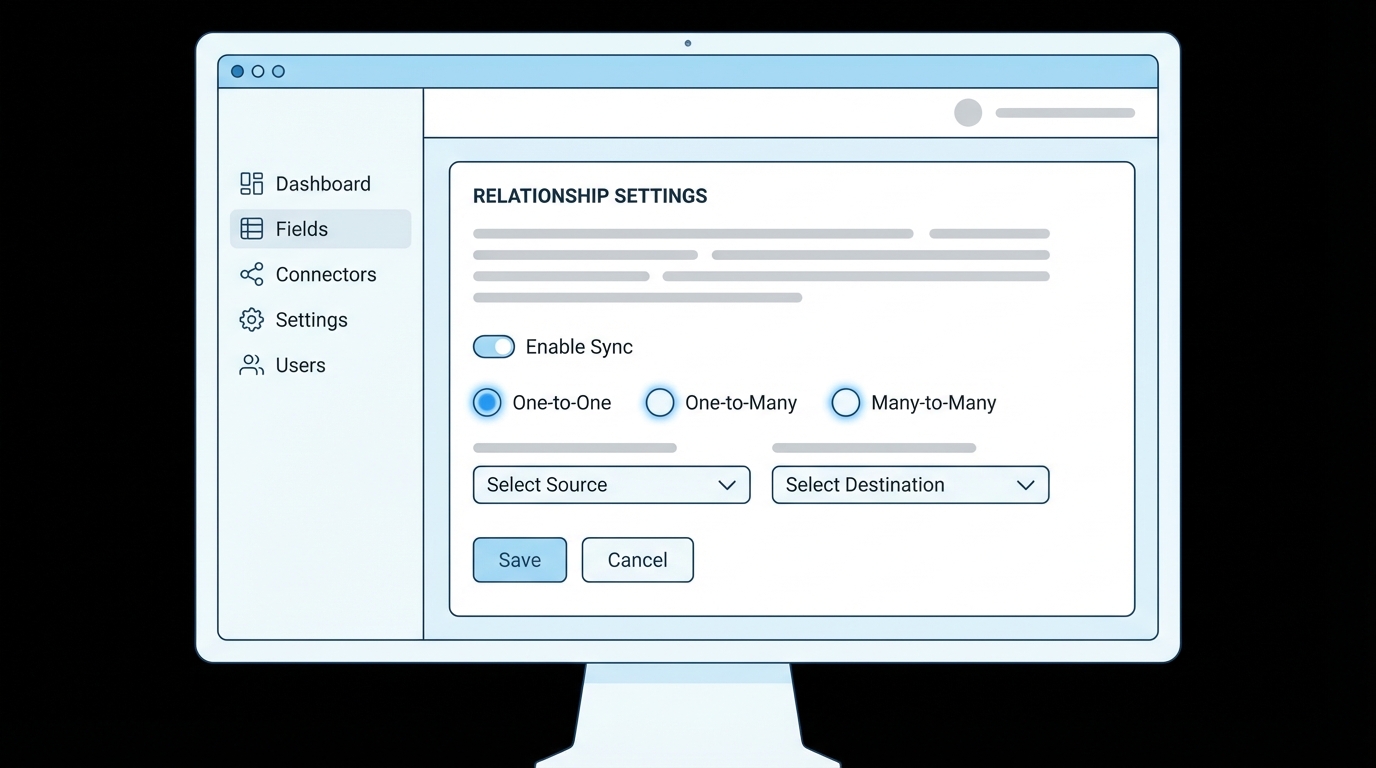
A clean, professional UI mockup of a database relationship configuration screen showing various selection options and settings.
Handling Salesforce Cascade Delete in Apex and Flow
So what happens to your automation when a delete cascades? This is where things get interesting. When a parent record is deleted, the child triggers still fire. If you have complex logic or heavy flows on those child objects, you might find yourself hitting DML limits or timeout errors.
I always suggest checking out this guide on Salesforce Flow data integrity before you start building massive delete chains. And if you're working with millions of records, you really need to be careful about managing Salesforce large data volumes. A massive cascade can easily lock up your org if you aren't batching things correctly.
"One thing that trips people up is the Recycle Bin. If you delete a parent, the children go to the bin too. But if you restore that parent, Salesforce tries to bring the children back. It's not always perfect, so don't treat the Recycle Bin as a backup strategy."
Real-World Gotchas and Best Practices
Here's the truth: most teams get this wrong because they don't test the "ripple effect" of a delete. They test the parent, see it works, and move on. But what about the triggers on the third or fourth level of the relationship? Here is what I've learned the hard way about the Salesforce cascade delete:
- Check your triggers: Child triggers fire during a Salesforce cascade delete. If they're poorly written, they'll slow down the whole transaction and might even cause it to fail.
- Watch your limits: Deleting one Account might trigger the deletion of 5,000 Contacts. That's a lot of DML rows hitting the system at once.
- Document the behavior: Don't leave it to the next developer to guess if a lookup is meant to cascade or not. Use the description field!
- Sandbox testing: Never run a bulk delete in production without testing the cascade impact in a sandbox first. You need to see how your flows and triggers react.
Key Takeaways
- Master-Detail relationships always use cascade delete by default.
- Lookup relationships can be configured for Salesforce cascade delete, but it's optional and sometimes restricted.
- Child triggers and flows will execute when a cascade happens, which can impact performance.
- Restoring a parent record from the Recycle Bin will also attempt to restore the cascaded child records.
At the end of the day, the Salesforce cascade delete is there to help you maintain a clean data model. Just make sure you know which "delete" button is going to trigger a landslide. If the logic gets too complex for a simple relationship setting, don't be afraid to write a custom Apex batch job to handle the cleanup exactly how you want it.



Leave a Comment