


I've been tracking Salesforce AgentExchange trends pretty closely since the platform went live in March 2025. What sits on it is a different shape from the usual app store listing or heavy soql-in-loops-security-review-impact-for-managed-packages/" class="auto-link">managed package, and that changes how we build. Instead of hunting for big bloated apps, we're picking up modular components like prompts, actions and topics and plugging them into workflows we already have.
The first six months were a bit of a wild west. A lot of early experimentation, then a stretch where Salesforce cleaned up the junk, and now something closer to maturity. If you haven't checked it out lately, it's much more partner-driven than it was. By early October the marketplace hit 122 listings, a big jump from the 55 we saw at the start.
Analyzing recent Salesforce AgentExchange trends
Apps more than doubled in half a year. The number I care about more is active publishers, which grew at almost exactly the same rate: we're sitting at about 102 unique developers right now. That tells me we don't have a few big players spamming the marketplace with low-quality tools.
Most developers are only putting out one or two high-quality listings. In my experience, that's exactly what you want to see when you're looking for something to put into a production environment. You want focused tools that do one thing really well, and these Salesforce AgentExchange trends suggest the community is prioritizing utility over quantity.

A professional analytics dashboard showing growth metrics and bar charts for different software categories in a clean CRM interface.
Where the growth is happening
So what are people actually building? Sales is still the leader, which shouldn't surprise anyone who has worked in the ecosystem for more than a week. But Analytics has tripled in size lately. I've seen teams use these components to get way more out of their data without having to write custom controllers from scratch. If you're looking for inspiration, check out these 8 practical Agentforce use cases to see how this logic actually fits into a day-to-day role.
Productivity tools are also stabilizing, mostly helper actions that handle lead enrichment or case triage. And now that the big events are over, Commerce is starting to pick up steam too, with names like Breadwinner and Bullhorn out in front. These Salesforce AgentExchange trends suggest that the "boring" but necessary tasks are being automated first.
How to capitalize on Salesforce AgentExchange trends safely
The shift toward modular AI means you can deploy AI incrementally. You don't have to go all in on a massive project that takes six months to show a return. Start with a single prompt or a flow action and scale up as you get comfortable. It's a much safer way to work, especially if your stakeholders are nervous about AI costs or accuracy.
One thing that trips people up is seeing the listing count fluctuate. Don't let that scare you. When the numbers dip, it's usually because Salesforce is retagging items or pruning out early prototypes that didn't meet the bar. That's a good thing. It means the marketplace is becoming a more reliable source for professional-grade components rather than a dumping ground for beta tests.
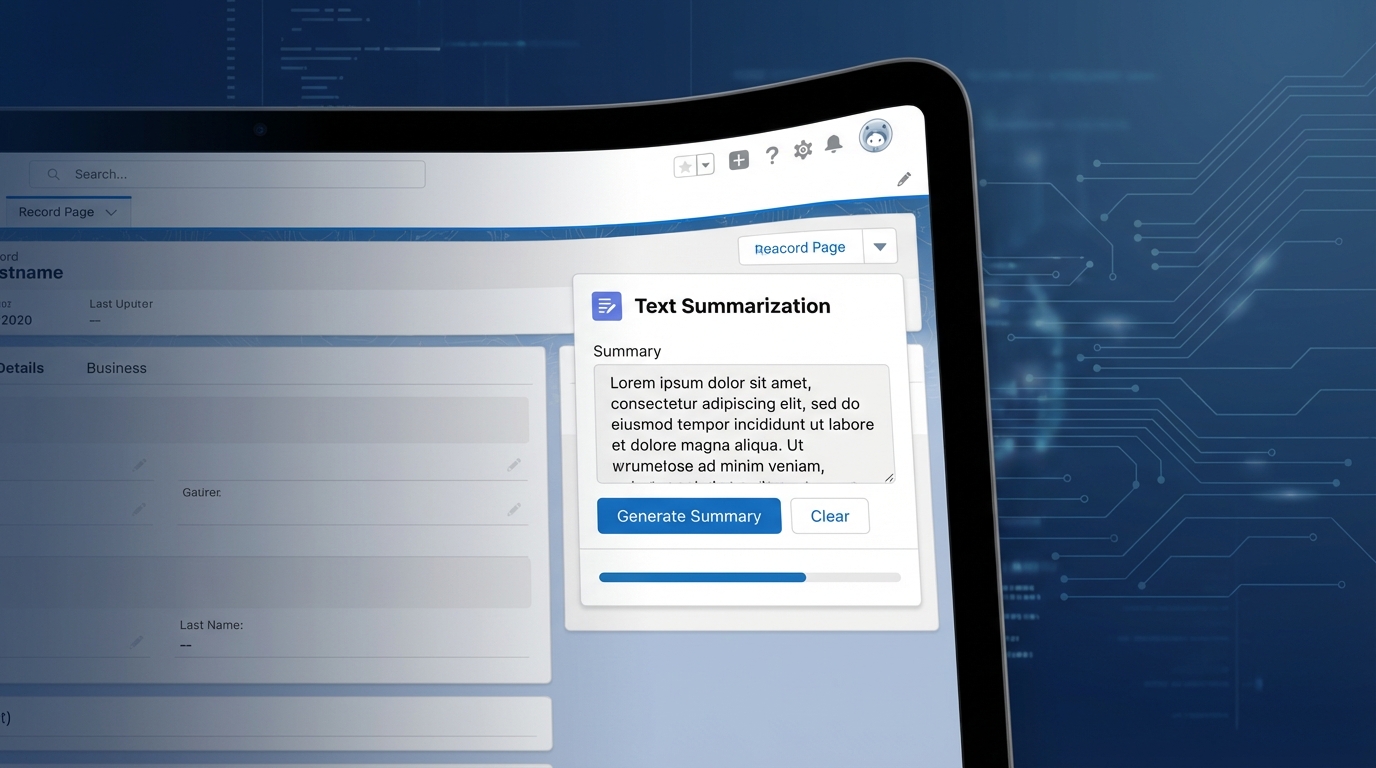
A realistic Salesforce UI mockup showing a text summarization component integrated into a standard record page.
Implementation tips for real orgs
If you're ready to start playing with these tools, my advice is to keep it simple. Don't try to automate your entire customer journey on day one. Pick a low-risk process. Maybe it's just summarizing a long text field or suggesting a follow-up task. I've had a lot of success using AI-powered flows to handle messy data before it even hits the database.
Pro tip: Always prefer published, functional components over anything that looks like an early prototype. Look for publishers with a track record in the ecosystem. It'll save you a ton of debugging time later.
And remember, you can combine these things. Take a prompt from one publisher, a flow action from another, and wrap them in a custom topic. Why build custom logic when someone else has already figured out the hard parts? Keeping up with Salesforce AgentExchange trends means knowing when to build and when to buy.
Key takeaways
- Use modular components for low-risk tasks like lead enrichment or case summaries to build trust with users.
- Salesforce AgentExchange trends show the marketplace maturing, with more stable listings than the early 2025 versions.
- Sales is the popular category, but the growth in Analytics components is the bigger opening for data-driven teams.
- Stick with known names or focused developers who specialize in one or two high-quality tools.
The marketplace is finally moving past the hype phase. We're getting real tools that solve real problems without the overhead of a massive implementation. Go browse the exchange this week, find one small action that saves your users five minutes a day, and start there.


Leave a Comment