

I've spent a lot of time thinking about what real Salesforce Admin value looks like in a messy, fast-moving org. It's easy to get caught up in the latest feature releases or flashy new tools, but I've found that the most important thing we do isn't building new stuff. It's creating clarity.
Look, we've all inherited an org that felt like a junk drawer. You know the one - 500 custom fields on the Lead object, three different "Status" fields, and automations that nobody remembers building. When things get that cluttered, the business stops trusting the data. And when trust goes, the value of the platform goes with it.
Defining the true Salesforce Admin value through clarity
In my experience, clarity is the secret sauce that makes everything else work. It's the difference between a team that's constantly fighting fires and one that's actually moving the needle. So what does this actually mean in the real world? It means fewer "Why did the system do that?" emails and more "This report is exactly what I needed" comments.
Clarity shows up in a few specific ways:
- Data that actually makes sense and follows a logical structure.
- Automations that are predictable and don't break every time you touch them.
- Documentation that explains the "why" behind a decision, not just the "how."
- Dashboards that tell a clear story instead of just dumping a bunch of numbers on a page.
When you focus on these things, the Salesforce Admin value becomes impossible for leadership to ignore. You aren't just a "ticket taker" anymore. You're the person making the business run better.
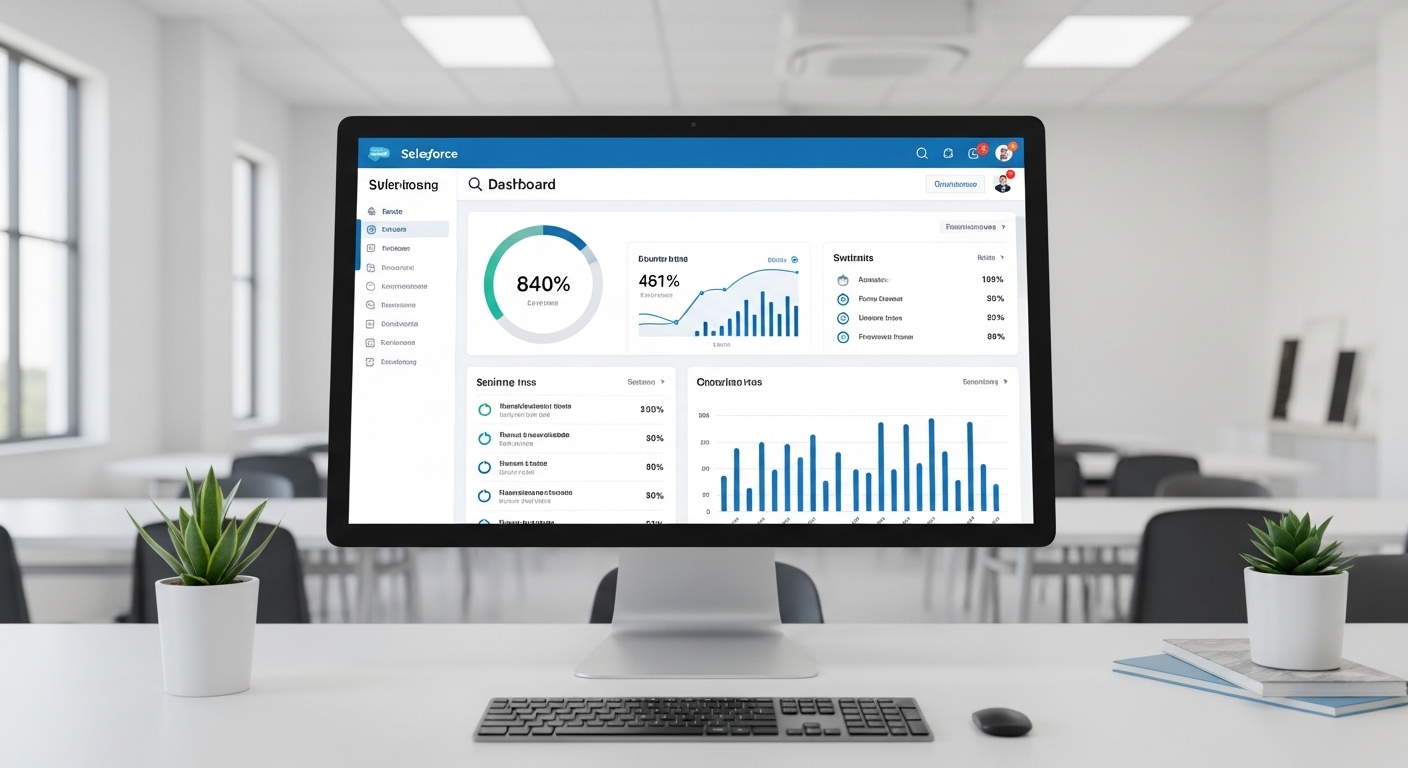
A clean and professional Salesforce Lightning dashboard showing organized charts and business metrics on a desktop monitor.
Practical ways to boost your Salesforce Admin value today
So how do we actually get there? I've seen teams try to fix everything at once and fail. The trick is to treat it like a regular maintenance schedule. You don't wait for your car to break down before you change the oil, right? Your Salesforce org is the same way.
Here's a breakdown of what I do when I'm trying to clean things up:
- Audit those fields: Use a tool to find fields with no data. If it hasn't been used in six months, it's probably safe to cut. Just make sure you back it up first.
- Clean up your Flows: Take a look at your automation inventory. If you have five different Flows running on the same object, it's time to consolidate. Following best practices for Salesforce Flow will save you a massive headache later.
- Write it down: I'm not talking about a 50-page manual. Just a simple wiki or even a shared doc that explains why you built that weird validation rule. Future you will thank you.
- Talk to people: This is probably the most overlooked part of the job. Sit down with your stakeholders once a month. Ask them what's annoying them. You'll be surprised how often a five-minute fix can solve a huge pain point.
Pro tip: When you're documenting a customization, focus on the business rationale. Don't just say "I built a Flow." Say "I built this Flow to ensure the Sales team doesn't forget to add a contact role before closing a deal."
This is where you move from being a technician to thinking like a Salesforce Architect. You're looking at the big picture and showing real Salesforce Admin value by acting as a consultant for the business.
The payoff of a clear org
Why does all this quiet work matter? Because it pays dividends. When the org is clear, onboarding a new user takes days instead of weeks. When you go to add a new integration, you don't have to spend three days figuring out if you're going to break a hidden dependency. Best of all, your leadership team starts to rely on your dashboards because they actually reflect the truth.
A quick best practices checklist
Here's a simple list of things I try to keep on my radar to keep the org healthy:
- Keep a lightweight documentation hub that's easy to update.
- Always test in a sandbox - no exceptions.
- Set up alerts for when your key integrations or bulk jobs fail.
- Watch your limits. Don't wait until you hit 100% of your custom fields to start deleting things.
Key Takeaways
- Clarity is a multiplier for everything else you do in Salesforce.
- Regular cleanup isn't a chore; it's a strategic move to reduce technical debt.
- Documentation should focus on the business "why" to provide long-term value.
- Executive trust is built on data they can actually understand and use.
At the end of the day, our job is to make the complicated stuff look easy. It's the quiet work - the cleanup, the documentation, the thoughtful dashboarding - that really builds trust. That's where the true Salesforce Admin value lives. It's about building a system that doesn't just work, but actually helps the team move faster and make better choices every single day.




Leave a Comment