
Understanding Salesforce's "enterprise vibe coding"
"Vibe coding" is Andrej Karpathy's term for building software by handing the work to Large Language Models (LLMs), giving in to the vibes, and abstracting away the details of traditional coding.
The concept works well for rapid prototyping. Getting from a prototype to something functional and deployable usually takes real effort afterwards, because raw LLM output can fail to compile, carry bugs, or quietly do something other than what you asked for. It augments experienced developers, particularly on repetitive tasks; it does not stand in for them.
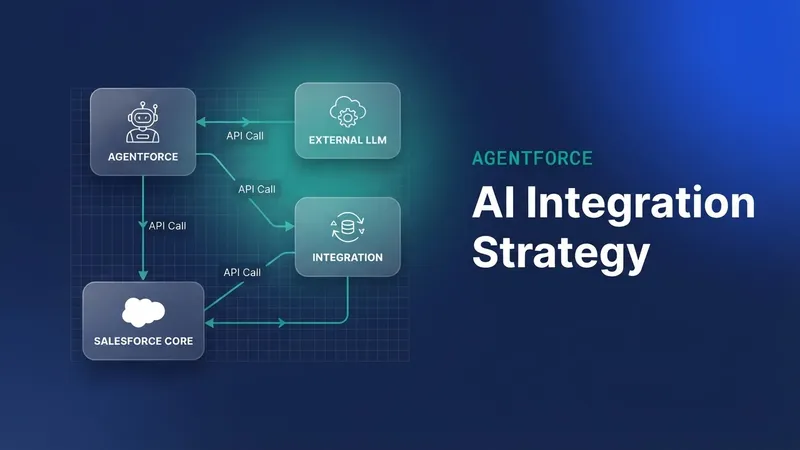
Salesforce is now taking the idea further with "enterprise vibe coding", a more structured and secure version of it delivered through the Agentforce platform.
Agentforce Vibes: enterprise-grade AI coding assistants
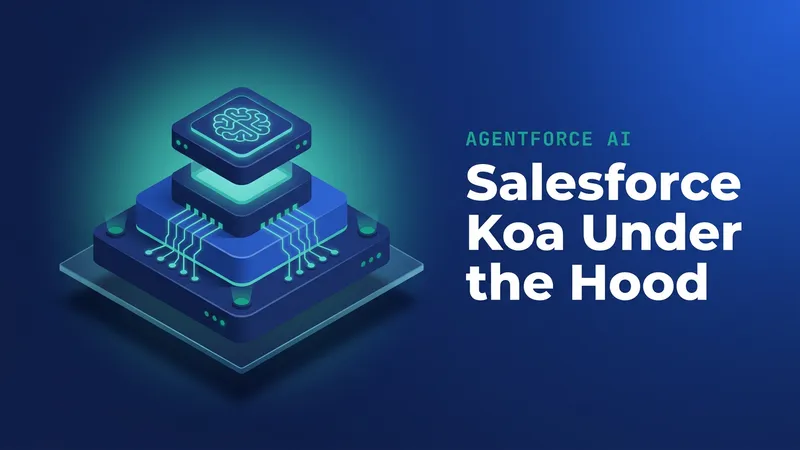
Salesforce's definition of enterprise vibe coding goes past plain LLM code generation by folding in security, governance and deep platform context. Agentforce Vibes is the implementation of that, and it is aimed at making AI-assisted development sturdier and safer.
Unlike generic vibe coding tools, Agentforce Vibes is engineered to take your specific Salesforce org parameters into account:
- Schema and metadata. Access to your data model and metadata means generated code is contextually aware and lines up with how your org is actually built.
- Trust Layer. This grounds LLM prompts in relevant data while masking sensitive information to keep it anonymous, which makes the responses both more useful and more secure.
The aim is better code accuracy, fewer hallucinations caused by missing context, and tighter security while you develop.
Key features of Agentforce Vibes
A few features stand out for enterprise work:
- Code rollback. Generative AI is non-deterministic by nature, so Agentforce Vibes lets you roll code back to specific checkpoints within a conversation. That is what makes iterating on AI-generated code manageable.
- Contextual planning mode. Before any code executes, it works out the best approach to the problem from your Salesforce org's context.
- MCP support and Salesforce DX integration. Hooking into Model Context Protocol (MCP) and Salesforce DX (SFDX) creates those rollback checkpoints automatically. It generates Apex, HTML, CSS and JavaScript, and it can write the test classes too.
The edge of Agentforce Vibes
Other enterprise-grade AI coding tools exist. Salesforce's argument for this one rests on:
- The Trust Layer, which keeps LLM interactions secure and context aware.
- Platform-specific training. Salesforce keeps training its models on Salesforce data and best practices, aiming for results that land closer to the ecosystem you work in.
- Built-in guardrails, drawing on Salesforce's decades of platform security experience, to keep development practices secure.
- Sandbox and scratch org connectivity, so development and testing happen where best practice says they should.
Embedding security, governance and platform-specific context is what separates this from vibe coding as originally described. It aims at a more reliable and efficient coding experience for Salesforce developers.

Leave a Comment